How Does SWIFT Work? A Step-by-Step Guide to International Bank Transfers

Think of SWIFT as a postal service for banks, minus the parcels. Instructions fly between institutions in seconds, but nothing of value rides along with them. When your bank tells a bank in Tokyo to pay somebody, the order crosses the network almost instantly, while the money follows later through ledgers the two sides keep with each other. Hold on to that split and most complaints about slow or shrunken payments start to make sense.
Who runs the SWIFT payment system
The name stands for Society for Worldwide Interbank Financial Telecommunication. Banks own it as a cooperative, headquartered in Belgium, and work began in 1973. Today institutions in more than 200 countries and territories are connected.
Every participant has an address, the BIC, better known as the SWIFT code. Eight or eleven characters tell the network which bank, which country and, if needed, which branch an order is meant for.
How a SWIFT payment works, step by step
A typical SWIFT payment process breaks into five moves.
1. You hand your bank the recipient's name, the account number or IBAN, and the code of the receiving bank.
2. Your bank composes a message and drops it onto the network.
3. If your bank has no account at the recipient's bank, the message hops through intermediary banks on the way. Our piece on correspondent banking shows who those banks are.
4. Each bank settles by shifting balances on its own books. Yours draws on its nostro account, which we explain in the nostro account guide.
5. The final bank credits the recipient, now and then after keeping a fee.
Notice that message and money take separate roads. The message lands in seconds. Funds can trail it by days.
What is a SWIFT transfer?
Banks apply the label to any cross-border wire sent over the network. From the sender's side, a SWIFT transfer is an international payment priced as a wire fee plus a currency margin, which is why it costs more than paying someone down the street. Other transfer types are compared in our guide to the wire transfer.
Reading the messages
If you’re wondering what a SWIFT message is, it is a standardized format with defined fields: sender, receiver, amount, currency, reference. Each form carries a number. The SWIFT message types worth knowing are MT103, a single customer credit transfer, MT202, which moves funds between institutions, MT940, a statement banks use to check their balances, and the free-text MT199 and MT799 that banks send each other.
The MT103 SWIFT message
Ask your bank for proof of payment and this is the document you tend to get. It names the ordering customer, the beneficiary, the amount, the currency and who bears which charges, plus a reference for follow-up questions.
The older MT layout is being swapped for ISO 20022, which fits more data into each payment. For cross-border traffic both formats were accepted side by side until late 2025.
Timing
How long does a SWIFT transfer take? Somewhere between a few hours and several business days. The spread comes from the number of banks involved, their time zones and cutoffs, compliance checks and local holidays. SWIFT says its SWIFT gpi service attaches a tracking reference to each payment and that many such payments land within hours, yet the banks in the chain still set the pace.
Fees
The cost of a SWIFT transfer depends on the banks and intermediaries involved. Your bank may bill a flat fee. Banks in the middle can skim theirs from the amount. The receiving bank may add its own, and a currency margin rides on top when two currencies are involved.
Because charges can come out of the payment itself, the recipient may get less than you sent. Many banks let you pay all charges up front so the full sum arrives.
How to do a SWIFT transfer
1. Log in to online banking, or visit a branch, and start an international payment.
2. Type the recipient's full name, address and account details, plus the bank's code.
3. Choose the currency and who pays the fees.
4. Add a reference, read everything once more and confirm.
5. Save the confirmation reference so you can follow the payment.
Why speed stays a banking problem
The network carries messages only, so delays belong to the banks. The G20 roadmap, coordinated by the Financial Stability Board, aims at faster, cheaper and more transparent payments by 2027.
Help is arriving from several sides: fuller data in each message, better tracking, links between national instant payment systems and stablecoin rails on selected routes. No single piece solves it.
Where newer rails fit
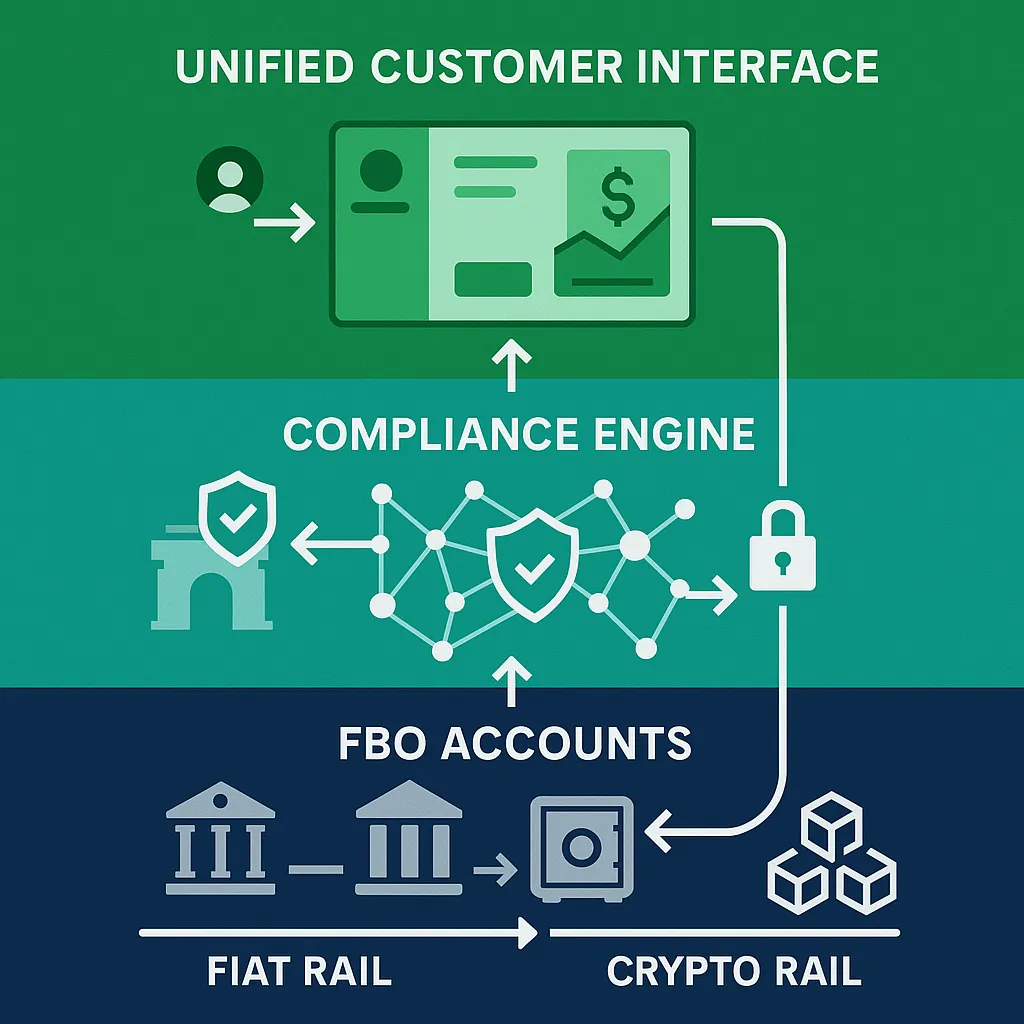
For bank payments SWIFT remains the main messaging layer, and the chain of banks behind it stays slow and pricey on many routes. A growing number of companies move value over stablecoin rails and convert to local currency at the last step. Our cross-border remittance infrastructure and payment orchestration platform let a business pick the best rail for each payment.
Frequently asked questions
Is SWIFT a bank?
No. It is a cooperative that provides secure messaging between financial institutions. It keeps no customer accounts and moves no money. Funds travel through the accounts banks hold with each other.
What does a SWIFT code identify?
A bank. The eight or eleven characters name the bank, its country and optionally a branch, which lets a payment message reach the right institution without anyone typing out a full address.
Why did my payment arrive with less money?
Banks in the middle can take fees along the way, the receiving bank may add its own, and a currency margin shaves off a bit more. Some banks let the sender cover all charges so the recipient gets the full sum.
Can I track a payment?
Often, yes. Many banks use the gpi service, which gives every payment a unique reference. Ask your bank for it and check the status with them. Banks outside the service may give you less detail.
Is there an alternative to SWIFT?
Yes. Regional systems and instant payment networks work inside some countries and regions, and some companies send cross-border payments on stablecoin rails. Most international bank payments still rely on SWIFT messaging.
Ready to move your business onto stablecoin rails?

Where technology meets money movement