Accounts and Rails in One Platform
E-transfer
FBO Bank Accounts vs. Building Your Own Infrastructure


How Different Businesses Use Wallets and Accounts
Remittance Apps
Contractor & Freelancer Platforms
Enterprise Treasury Teams
Stablecoin On/Off Ramps
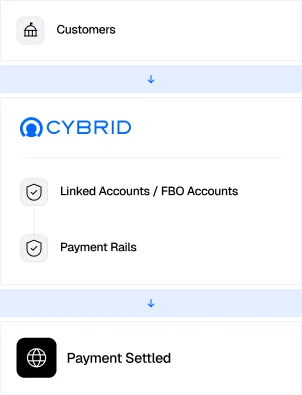
How FBO and Virtual Accounts Keep Customer Funds Organized
Every fintech that holds customer money needs somewhere safe to keep it. Our embedded banking API gives you that without turning you into a bank: customer funds sit in FBO accounts at licensed institutions, and your platform tracks each person's balance on top.
What Are FBO Accounts?
FBO stands for 'for the benefit of.' If you've been looking up what FBO accounts mean, the short version is this: a licensed bank holds one pooled account, and the money in it belongs to your customers rather than to you. Sub-ledger records show what each user owns and keep customer funds apart from the company's own cash. You get account and reconciliation infrastructure without applying for a banking license.
Why Fintechs Skip the Charter Route
A banking charter takes years. A direct partnership is quicker but still leaves you building ledgers, reconciliation and reporting yourself. Founders who search for banks that offer FBO accounts often end up with a short list and long waiting times. We work with licensed institutions and open FBO bank accounts for you through a modular API, so opening, tracking and reporting work from day one for USD and CAD.
A Named Reference for Every Customer
Our virtual account API gives each customer a named account with its own reference number. Deposits arrive tagged to the right person, so nobody on your finance team matches transfers by hand, and daily reconciliation turns into a data feed. Platforms use these named accounts for contractor payouts, marketplace balances and other flows where money has to be attributed to one person.
Fiat and Digital Balances in One Wallet
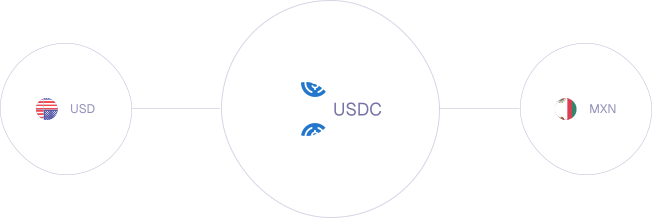
One wallet can hold USD, CAD, USDC and USDT side by side, and users never handle keys or addresses. The embedded wallet API shows those balances in your app, while the stablecoin wallet API applies conversion rules on receipt or at withdrawal. A customer in Toronto can receive CAD while your platform holds it as USDC until it's needed. Users can initiate payouts in the app; delivery timing depends on the payout rail and destination.
Domestic Rails in the US and Canada
In the US, funds move over ACH, RTP and FedNow. In Canada, they move over EFT and Interac e-Transfer. ACH pulls collect money from the customer's bank, while real-time rails send it out in seconds at any hour. The platform picks the rail from the transaction type and destination, and settlement speed depends on the rail chosen.
Lo que dicen nuestros clientes

Frequently asked questions






Ready to move your business onto stablecoin rails?